


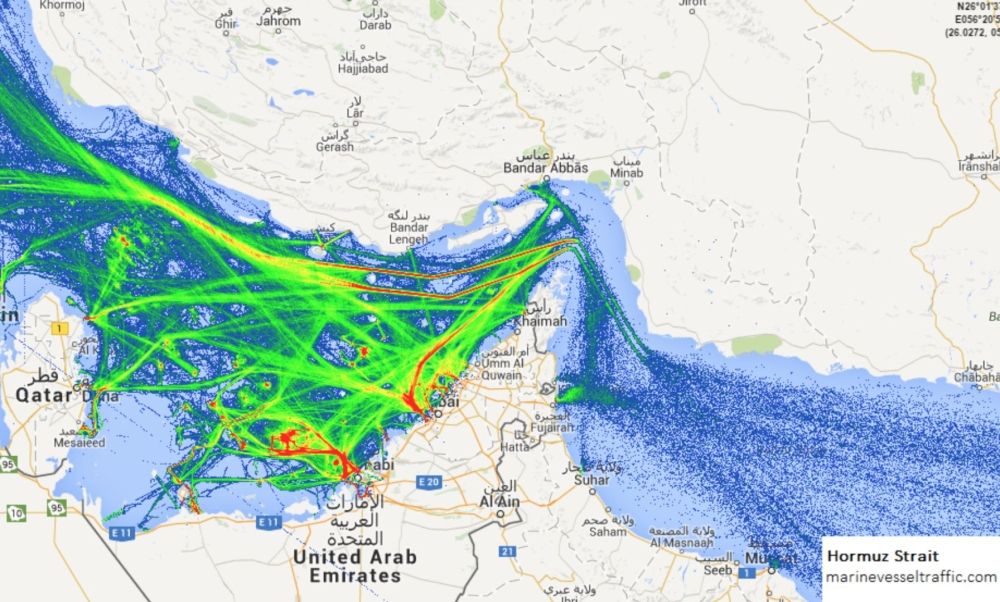
Ship movements through the Strait of Hormuz fell sharply on Sunday after Iran announced the reimposition of restrictions on the strategic waterway, citing alleged violations of an interim peace agreement by Israel and the United States.
Data from maritime analytics firm Kpler showed that only five vessels transited the strait on Sunday, down from 26 recorded a day earlier.
Among the vessels that passed through were three Very Large Crude Carriers (VLCCs), each transporting approximately two million barrels of Saudi crude oil and fuel oil. One of the tankers was reportedly bound for Japan.
The actual number of vessels operating in the area could be higher, as some ships are known to deactivate their tracking transponders while navigating Gulf waters.
Iran had eased its effective blockade of the Strait of Hormuz last week following an agreement with the United States to extend an April ceasefire by 60 days to facilitate ongoing peace negotiations.
However, the Islamic Revolutionary Guard Corps (IRGC) announced on Saturday that the waterway would once again be closed, citing Israeli military strikes in Lebanon as the reason for the move.
Despite Tehran’s announcement, the US military said commercial shipping traffic in the region had not come to a complete halt.
Kpler data showed that on Saturday, three VLCCs carrying crude oil from the United Arab Emirates, Kuwait and Iraq exited the strait, alongside three tankers transporting refined petroleum products.
A further 13 vessels entered the waterway on the same day, including two VLCCs.
The latest disruption has prompted Gulf oil producers to explore alternative export arrangements. Abu Dhabi National Oil Co. and Kuwait Petroleum Corp. have reportedly issued crude oil tenders offering buyers the option of loading cargoes either inside or outside the Strait of Hormuz.
The Strait of Hormuz is one of the world’s most critical energy corridors, handling a significant share of global oil exports. Any disruption to traffic through the narrow passage has the potential to affect global energy supplies and shipping markets.