


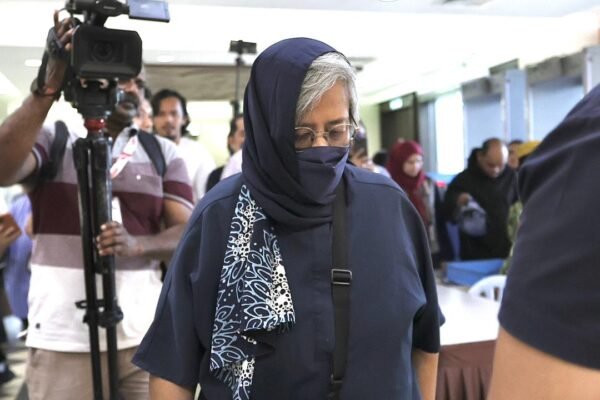
The High Court here today allowed a judicial review application filed by the eldest daughter of former Finance Minister, Tun Daim Zainuddin, regarding the condition requiring her to surrender her passport as part of her bail in a case involving failure to declare assets.
On April 8, Asnida pleaded not guilty to charges of failing to comply with a notice issued by the Malaysian Anti-Corruption Commission (MACC), known locally as Suruhanjaya Pencegahan Rasuah Malaysia (SPRM), dated November 8, 2023. The charge relates to her alleged failure to declare shareholdings in several companies, including Amiraz Sdn. Bhd., Arida Farms Sdn. Bhd., Kangkung Catering Sdn. Bhd., Transgrade Sdn. Bhd., and Gajah 3 Foods Sdn. Bhd.
At that time, the court allowed her to be released on bail of RM50,000 with one surety, on the condition that her passport be surrendered to the court until the case is concluded.
High Court Judge Nurulhuda Nur’aini Mohamad Nor made the decision after hearing submissions from both parties in the review application against the Sessions Court order imposed on Asnida, 65.
The court subsequently ordered that her passport be returned permanently within seven days from today.
“After hearing submissions from both parties, the court is of the view that there is no merit for the passport to continue being retained by the court. The issue of failure to attend court has not been proven. Therefore, the court allows the review application and the applicant’s passport is to be returned,” the judge said.
Earlier, Deputy Public Prosecutor Nidzuwan Abd Latip objected to the application, arguing that the applicant posed a flight risk, noting that Asnida had previously failed to appear at MACC offices for statement recording purposes.
“The applicant also frequently travels abroad and has business interests overseas, hence there is a risk of flight. The court is asked to consider this case as it involves the daughter of the late Tun Daim and touches on public interest,” he said.
However, lawyer Rajesh Nagarajan, representing Asnida, argued that the passport surrender condition lacked sufficient basis, as the prosecution had failed to provide justification or supporting evidence.
He added that during the investigation process, his client had fully cooperated with the MACC, including attending interviews when required.